

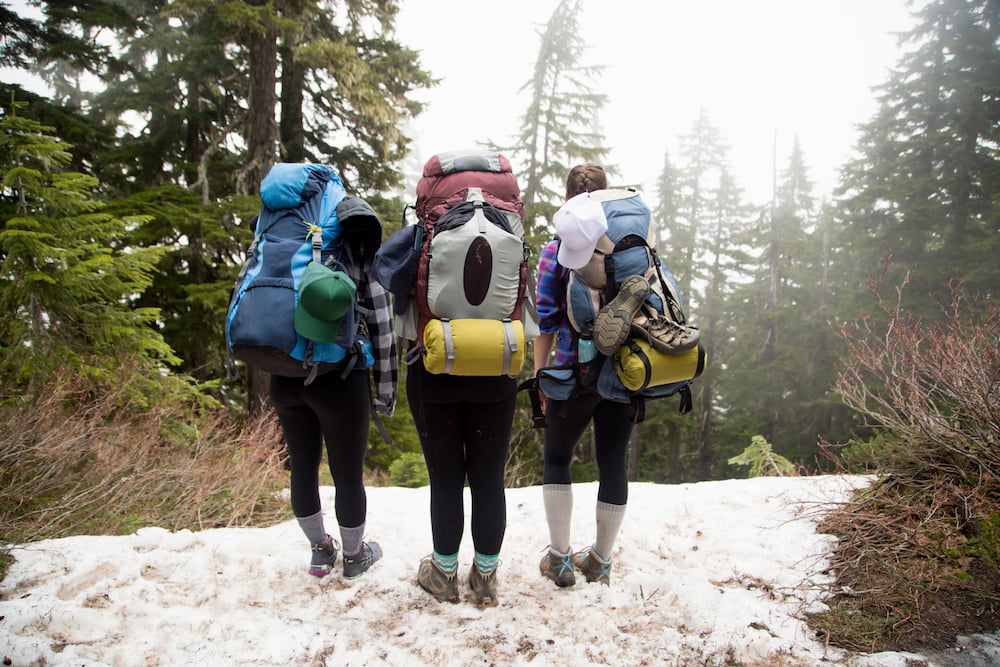
The first time I winter backpacked, I woke up convinced my nose had fallen off.
It was still attached. Barely. My water bottle was frozen solid. My boots felt like concrete bricks. And I lay there in the blue-dark silence thinking, Why do people do this on purpose?
By mid-morning, though, the forest glittered like it had been dipped in sugar. No bugs. No crowds. Just the quiet crunch of snow under my boots and breath puffing out like a tiny steam engine. That’s when it clicked. Winter backpacking isn’t about suffering. It’s about learning how not to suffer.
If you do it right, it’s magic. If you do it wrong, it’s a survival documentary.
Let’s aim for magic.
1. Stop Dressing Like a Marshmallow
Here’s the mistake almost everyone makes. You’re cold at the trailhead, so you pile on every layer you brought. Fifteen minutes later, you’re sweaty. Thirty minutes later, that sweat turns icy and now you’re cold from the inside out.
Sweat is a villain in winter. Start your trek slightly chilly. I know, it feels wrong. But your body is a furnace once you get moving.
Think in layers:
- Base layer: Moisture-wicking, not cotton. Ever.
- Mid layer: Fleece or light insulation for warmth.
- Shell: Wind and waterproof protection.
As soon as you feel warm, vent. Unzip. Remove a layer. Adjust early and often. Winter backpacking is less about brute toughness and more about temperature choreography.
When you get to your campsite, that’s when the puffy jacket earns its keep.
2. Your Sleeping Bag Is a Relationship
You’re going to spend 10 to 14 hours inside that thing. Choose wisely.
A three-season bag in winter is wishful thinking with consequences. Look at the comfort rating, not the survival rating. If nighttime temps will hit 15°F, don’t bring a 20°F bag and hope for the best. That’s optimism masquerading as planning.
And don’t forget your sleeping pad. The ground steals heat faster than air. I learned that the hard way on a frozen ridge in Virginia when I thought my bag was failing me. It wasn’t. My pad’s R-value was laughable. I may as well have been sleeping on a refrigerated countertop.
In winter, you want a higher R-value pad. Some people even stack two. It feels excessive until you’re not shivering at 2 a.m.
Also, eat before bed. A small, high-fat snack gives your body fuel to generate heat. It’s like stoking a tiny internal campfire.
3. Protect Your Water Like It’s a Toddler
Water freezes. You still need it. This is the paradox.
First rule: skip the hydration bladder. The tube will freeze faster than your optimism. Use insulated bottles instead. And, store them upside down in your pack. Sounds strange, but water freezes from the top down. If ice forms, it’ll freeze near the bottom, not at the opening.
At night, tuck your water bottle inside your sleeping bag. Yes, really. Make sure it’s sealed tight. It’ll keep from freezing and add a bit of warmth.
Pro tip? Bring one wide-mouth bottle specifically for hot water. Fill it before bed and slide it into your sleeping bag near your feet. It’s like camping with a polite little radiator.
4. Eat Like You Mean It
Winter backpacking burns calories like a bonfire eats kindling as the cold air forces your body to work harder. Snow travel takes more effort. And staying warm? That costs energy.
This is not the time for dainty meals.
Bring calorie-dense foods:
- Nut butters
- Cheese
- Sausage
- Chocolate
- Instant mashed potatoes with olive oil stirred in
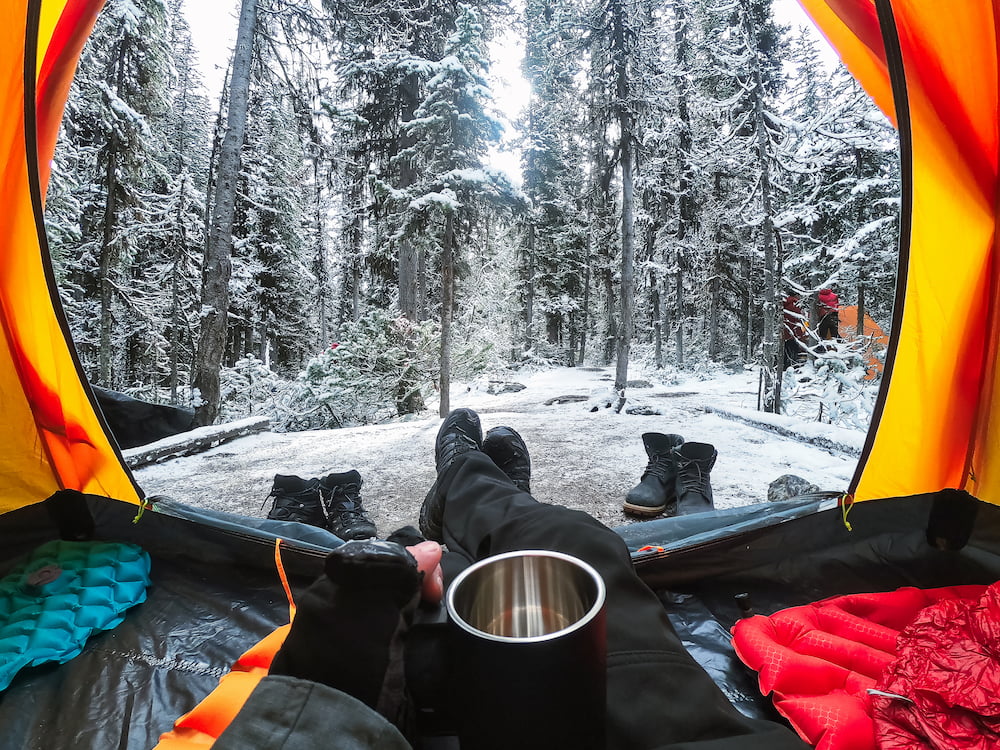
Hot meals aren’t just about nutrition. They’re morale. There’s something deeply human about holding a warm mug in frozen air. I’ve had backcountry ramen that tasted better than a five-star dinner simply because my fingers were numb and I needed it.
Eat before you’re starving. Snack often. Your body is your heater. Feed it.
5. Master Camp Setup Before You’re Miserable
Winter punishes procrastination.
In summer, you can roll into camp, wander around, take photos, debate tent placement. In winter? Once the sun dips, the temperature follows in a hurry. Set up camp early. Before you’re exhausted, before you’re cold.
Pack your gear so your tent and insulation are easy to access. The faster you can create shelter, the faster you can change into dry layers. Trust me, you’ll want to get out of those slightly damp hiking clothes right away. Once you stop moving, those sweaty clothes become traitors.
One small ritual I swear by: dry socks reserved only for sleeping. They never touch trail dirt. Sliding into them at night feels absurdly luxurious. Like five-star hotel energy, except you’re in a snowfield.
6. Respect the Little Things
Winter isn’t forgiving, but it is predictable.
- Keep batteries warm. Cold drains them fast. Store electronics inside your jacket.
- Loosen boots slightly at camp to improve circulation.
- Shake snow off gear before bringing it into your tent.
- Practice with your camp stove at home so you aren’t figuring it out the first time with frozen fingers at camp.
These aren’t dramatic survival hacks. They’re small decisions that stack in your favor and stacking odds in your favor is the whole game.
Here’s the part nobody tells you.
Winter backpacking shrinks the world in the best way. Your concerns become basic and beautifully simple. Am I warm? Am I fed? Is my shelter solid? The noise fades. The forest is quiet in a way that feels sacred. Snow absorbs sound. Even your thoughts feel softer.
It’s not comfortable in the plush, couch-and-blanket sense. It’s comfortable in the earned, capable, deeply alive sense. You realize you don’t need perfect conditions. You need preparation. You need respect for the cold. And a really good pair of dry socks.
That first trip when I thought my nose was gone? I went back the next month. Because once you learn how not to freeze your ass off, winter stops feeling like an enemy and starts feeling like an invitation.
As always, no matter when you explore the outdoors, leave no trace.

